

AI-powered childcare apps represent a major shift in how families and providers manage caregiving. From predictive analytics and emotion recognition to automated administration and personalized learning, these platforms reduce workload while improving safety and efficiency. Early pioneers like Bloomily and Indapoint demonstrate how AI can act as a proactive caregiving partner. Despite privacy and ethical challenges, ongoing innovation points toward a future where AI enhances childcare without replacing human intuition.
Introduction A New Era of Peace of Mind for Busy Families

In today’s fast-paced world where parents balance demanding careers and family responsibilities, AI-powered childcare apps are redefining modern parenting. These intelligent platforms combine artificial intelligence in childcare with everyday caregiving to deliver real-time monitoring, personalized learning support, and enhanced child safety. By automating routine childcare tasks, these smart parenting apps reduce parental stress while improving efficiency and ensuring children receive consistent, high-quality care. As adoption grows, AI childcare technology is becoming an essential solution for families seeking safer, more organized, and data-driven caregiving.
The Origin Story From Basic Trackers to Intelligent Companions
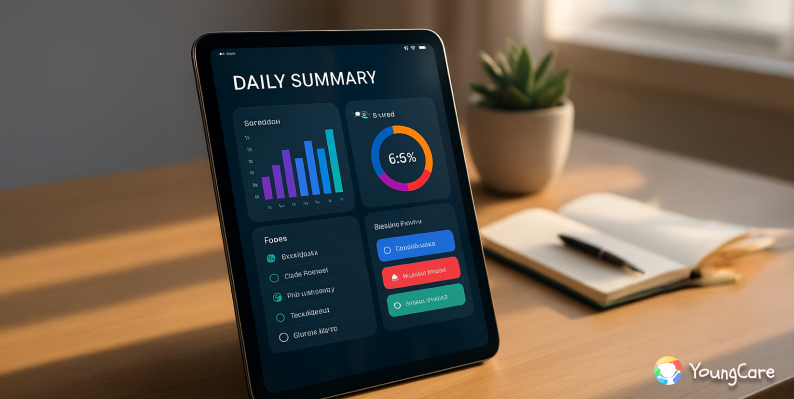
Modern childcare apps began as simple parent-provider communication tools in the early 2010s, offering features like attendance tracking and photo sharing as smartphone adoption increased. However, the true transformation arrived with AI in childcare and machine learning integration around 2020, powered by advances in predictive analytics and IoT technology. Industry innovators such as Bloomily and Indapoint introduced intelligent capabilities like arrival predictions and emotion recognition. These breakthroughs shifted apps from passive record-keeping tools into proactive AI childcare platforms that continuously learn from behavioral data to improve safety, efficiency, and personalized caregiving.
Core Ideas How AI Powers Smarter Childcare

At their core, AI-powered childcare apps use AI-driven analytics to process data from check-ins, behavior patterns, and daily schedules to deliver highly tailored caregiving support. Key features include emotion recognition, child health monitoring, predictive analytics in childcare, personalized learning plans, and automated administrative tools that streamline operations. Research shows that AI integration in childcare can significantly reduce administrative errors and save caregivers hours each week. Meanwhile, predictive systems improve planning and resource allocation, allowing childcare providers to operate more efficiently while maintaining high standards of safety and personalized child development.
Real-World Applications Stories from the Frontlines

AI-powered childcare apps demonstrate real-world impact through practical everyday use. For example, Bloomily uses predictive AI to forecast morning arrivals, while Indapoint offers a virtual assistant that reduces caregiver workload by managing parent communication. These AI childcare solutions improve administrative speed, enable real-time GPS safety tracking, and streamline operations across childcare centers. Additionally, AI in special needs education enhances support programs by creating more immersive, adaptive learning environments. Together, these examples show how intelligent childcare technology increases efficiency, safety, and personalized care in modern caregiving.
Challenges and Critical Viewpoints Not Without Hurdles

Despite the rapid growth of AI-powered childcare apps, important challenges remain. Data privacy in childcare technology is a major concern, especially with sensitive data collection and facial recognition systems. The effectiveness of AI in childcare depends heavily on high-quality data, and ethical risks such as machine learning bias must be carefully managed. In addition, high development and implementation costs can limit access for smaller childcare providers. To address these issues, developers are prioritizing AI transparency, stronger privacy protections, and customizable security settings, ensuring that intelligent childcare solutions remain safe, ethical, and accessible.
Emerging Trends and Future Possibilities What’s Next?
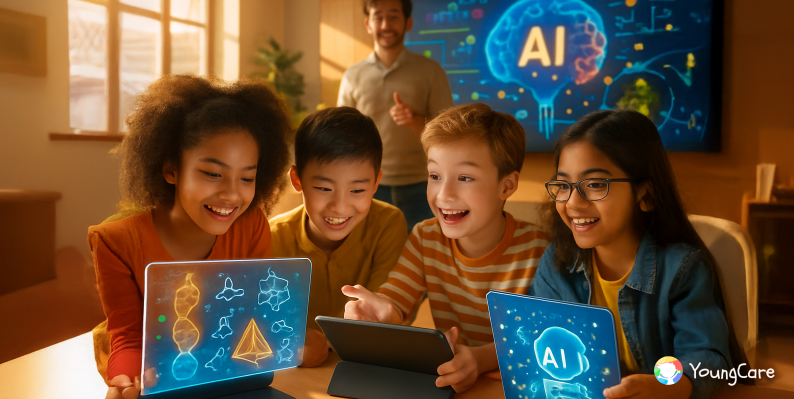
The future of AI-powered childcare apps is filled with innovation, including predictive health analytics, smart home integration, and global childcare collaboration platforms. Emerging trends show stronger connections between IoT in childcare and generative AI, creating more responsive and personalized caregiving experiences. By 2026, experts predict growth in blockchain-secured compliance systems and highly specialized custom AI childcare apps designed to address unique operational needs. These advancements signal a shift toward smarter, more connected ecosystems where intelligent childcare technology improves safety, efficiency, and long-term child development.
Conclusion
AI-driven childcare technology is no longer futuristic — it is becoming a practical support system for modern families. When implemented responsibly with strong privacy safeguards, these tools can reduce caregiver stress, improve child safety, and create more personalized developmental environments. The key lies in balancing automation with human empathy, ensuring technology enhances rather than replaces the caregiving bond.
Ready to explore smarter childcare solutions? Discover how AI-powered childcare platforms can simplify caregiving, improve safety, and support modern parenting — contact us today to start your intelligent childcare journey.